
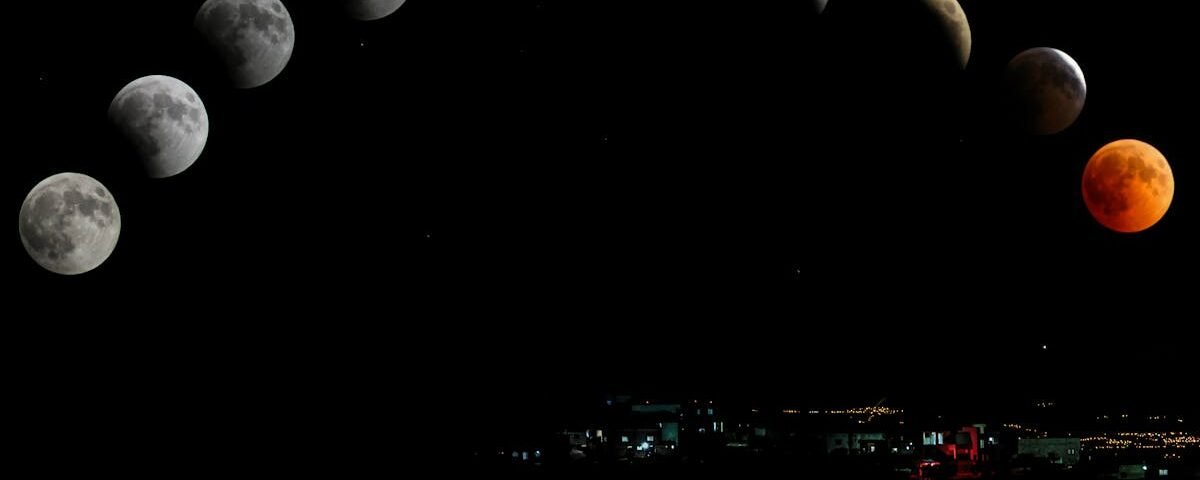
Full moons have fascinated people for thousands of years. Even though we now understand the science behind them, many of us still pause when a bright full moon rises. Their predictable rhythm offers a sense of grounding, comfort, and continuity.
Every month has a full moon name — sometimes poetic, sometimes practical, always rooted in how people once observed the land, animals, and seasons.
Let’s take a gentle walk through the lunar year.
🌕 January: The Wolf Moon
The Wolf Moon likely comes from the sound of wolves calling across winter landscapes.
January’s moon feels crisp, cold, and crystal-clear.
Enjoy it: A brisk evening walk or a cozy moment by a window with tea.
🌕 February: The Snow Moon
The Snow Moon rises during the heart of winter. Many regions see their heaviest snowfall in February.
Enjoy it: Warm drink, soft blanket, and a few minutes of stargazing.
🌕 March: The Worm Moon
As the ground thaws, earthworms return and robins follow. The Worm Moon marks a quiet, hopeful shift toward spring.
Enjoy it: Kick off spring planning. A small reset goes a long way.
🌕 April: The Pink Moon
The Pink Moon is named for pink phlox, one of the earliest spring flowers.
It’s cheerful, even when skies are still cool.
Enjoy it: Twilight walk to spot early buds and blooms.
🌕 May: The Flower Moon
The world is in full bloom, and the Flower Moon celebrates spring at its peak.
Enjoy it: Bring home fresh flowers — even one small bundle lifts a room.
🌕 June: The Strawberry Moon
The Strawberry Moon aligns with berry-harvest season. You’ll often see warm, golden moonrises thanks to early-summer haze.
Enjoy it: A small berry dessert or fruity mocktail outdoors.
🌕 July: The Buck Moon
Deer begin regrowing their antlers, making the Buck Moon a symbol of strength and renewal.
Enjoy it: A slow, warm evening walk with deep breaths.
🌕 August: The Sturgeon Moon
Named for the large fish once abundant in late summer, the Sturgeon Moon echoes themes of resilience and abundance.
Enjoy it: Sit outside at dusk and let the sounds of late summer surround you.
🌕 September: The Harvest Moon
The Harvest Moon is the full moon closest to the autumn equinox. Historically, farmers used its bright light to gather crops.
Enjoy it: Take photos at moonrise — it often looks huge and golden.
🌕 October: The Hunter’s Moon
After harvest season, the Hunter’s Moon rises. It’s bold, bright, and deeply autumnal.
Enjoy it: Soup, candles, and a deliberately slow evening.
🌕 November: The Beaver Moon
Beavers reinforce their lodges for winter, giving this moon its name. The Beaver Moon has a cozy, transitional feel.
Enjoy it: Swap out blankets, refresh a corner, or begin winter nesting.
🌕 December: The Cold Moon
The darkest nights of the year bring the Cold Moon.
It often rises high — even higher than summer full moons — and glows with icy brilliance.
Enjoy it: Bundle up and step outside for two quiet minutes of stillness.
⭐ Special Full Moon Variations
Blue Moon
A second full moon within a single calendar month. Rare and fun — but the Moon doesn’t turn blue!
Supermoon
A full moon that occurs when the Moon is near its closest point to Earth (perigee).
It looks slightly larger and brighter.
Blood Moon
Seen during a total lunar eclipse, when Earth’s shadow gives the Moon a copper-red tint.
Micromoon
The opposite of a Supermoon — a full moon that occurs at its farthest distance from Earth.
🌕 2026 Full Moon Calendar (With Supermoons!)
These dates reflect the exact days each full moon occurs in 2026.
Local moonrise times vary by location, but the date itself remains the same.
You’ll also see which types of full moons become supermoons in 2026.
| Date (2026) | Full Moon Name | Notes |
|---|---|---|
| January 3 | Wolf Moon | Supermoon |
| February 1 | Snow Moon | — |
| March 3 | Worm Moon | — |
| April 2 | Pink Moon | — |
| May 1 | Flower Moon | — |
| May 31 | Blue Moon (bonus moon) | Not a supermoon |
| June 29 | Strawberry Moon | — |
| July 29 | Buck Moon | — |
| August 28 | Sturgeon Moon | — |
| September 26 | Harvest Moon | — |
| October 26 | Hunter’s Moon | — |
| November 24 | Beaver Moon | Supermoon |
| December 23 | Cold Moon | Supermoon |
⭐ In 2026, there are THREE supermoons:
- January 3 — Wolf Moon
- November 24 — Beaver Moon
- December 23 — Cold Moon
These are the best nights for dramatic moonrises, bright illumination, and great sky photography.
🌙 How to Use Full Moons for Simple, Slow-Living Moments
You don’t have to “do” anything special to appreciate a full moon.
Yet a small moment of intention can make the evening feel magical.
Here are gentle ideas:
- Step outside for 2–5 minutes at moonrise.
- Turn off indoor lights and let moonlight touch a room.
- Wrap yourself in a warm blanket on the porch.
- Take a moonlit walk with your dog.
- Snap a quick photo so you remember the moment.
- Write a single sentence about what the season feels like.
These simple pauses help you notice more — and that’s the heart of slow living.
Full moons remind us that time moves in cycles — comforting, steady, and full of small beauty.
Each month brings a different mood: the icy Wolf Moon, the blooming Flower Moon, the golden Harvest Moon, the bright winter Cold Moon.
And now that you have the complete 2026 full moon calendar, you can easily follow along, celebrate a few special nights, or build simple traditions around the lunar rhythm.