
Loneliness should never be your plus-one. Retirement is often sold as a long vacation. The reality? It’s a major life transition. The office chatter disappears, carpools end, and suddenly it’s very quiet on a Tuesday morning. The good news is that retirees today are rewriting the rules—and staying social is at the heart of a longer, healthier, happier retirement.
This guide breaks down why staying social matters (science backs it up), what the world’s longest-lived communities teach us, and how to build meaningful connections using both modern technology and old-school methods that still work beautifully.
Why Staying Social After Retirement Matters (More Than You Think)
Social connection isn’t just “nice to have.” It’s a health strategy. Research consistently shows that strong social ties are associated with:
- Lower risk of heart disease and stroke
- Reduced rates of depression and anxiety
- Better cognitive health and slower memory decline
- Increased longevity
One landmark study published in PLOS Medicine found that social isolation carries a mortality risk comparable to smoking and obesity. In plain terms: loneliness is dangerous, while friendship is powerful medicine.
Social interaction stimulates the brain, regulates stress hormones, and encourages healthier behaviors—like walking more, laughing often, and showing up for life instead of watching it from the couch.
What the Blue Zones Teach Us About Social Longevity
If you want proof that social connection fuels long life, look at the Blue Zones—regions of the world where people routinely live past 100. These include Okinawa (Japan), Sardinia (Italy), Ikaria (Greece), Nicoya (Costa Rica), and Loma Linda (California).
Despite cultural differences, they all share key social traits:
People belong to something. In Okinawa, seniors form moais—lifelong social circles that meet regularly for support, conversation, and purpose. In Sardinia, older adults are woven into daily village life instead of sidelined.
Connection is built into daily routines. Walking to town, sharing meals, sitting outside in the evening—social interaction isn’t scheduled; it’s automatic.
Elders are valued. Older adults aren’t isolated. They’re respected, consulted, and included. That sense of belonging fuels both mental health and longevity.
The takeaway? Staying social doesn’t require endless activities. It requires regular, meaningful connection.
The New Retirement Social Rule: Depth Beats Volume
Here’s the good news for introverts: you don’t need a packed calendar. Studies show that quality of relationships matters more than quantity. One or two trusted friends, a weekly group, or a shared purpose can deliver enormous benefits. The goal isn’t busyness—it’s belonging.
Modern Ways Seniors Are Staying Social (Technology That Actually Helps)
Technology, when used intentionally, can be one of the most powerful connectors in modern retirement. Far from replacing human interaction, today’s digital tools often restore it—bridging distances, rekindling old friendships, and opening doors to entirely new communities. Video calls make face-to-face conversations possible across miles and time zones, social platforms bring together people with shared interests, and learning apps turn curiosity into conversation. For retirees, technology removes barriers that once limited connection, such as mobility challenges or geographic isolation, and replaces them with choice and flexibility. When approached as a tool rather than a distraction, technology doesn’t make life more virtual—it makes relationships more accessible, consistent, and meaningful.
Resources that can keep you connected:
Video Calling. Platforms like Zoom, FaceTime, and WhatsApp allow face-to-face connection with family and friends across the country—or across the world. Weekly virtual coffee dates are becoming a retirement staple.
Interest-Based Online Communities. Facebook Groups, Meetup, and Nextdoor now host vibrant senior-focused communities centered around walking groups, book clubs, travel, volunteering, and hobbies. These often lead to real-world meetups.
Learning Platforms With Built-In Community. Online courses through platforms like Coursera, MasterClass, and community colleges often include discussion boards and live sessions—turning learning into a social experience.
Dating and Friendship Apps for Seniors. Apps like OurTime and Stitch focus on companionship, not just romance. Many retirees use them to find travel buddies, walking partners, or someone to share a meal with.
Technology works best when it leads to interaction, not endless scrolling. Think tool, not time sink.
Tried-and-True Ways to Build Community (Still the Gold Standard)
Some methods, however, never go out of style—because they work. Long before apps and online groups existed, people stayed socially active through simple, time-tested routines that are still just as effective today. Traditional social connection grows from shared experiences—regular gatherings, familiar places, and face-to-face interaction. Community centers, faith groups, volunteer organizations, clubs, and neighborhood routines naturally bring people together around common interests and shared purpose. These methods thrive on consistency rather than convenience, building trust and deeper relationships over time. For retirees, traditional social activities offer structure, belonging, and a sense of being needed—reminders that meaningful connection doesn’t require technology, just presence, participation, and the willingness to show up. Examples include:
Volunteering With Purpose. Volunteering creates instant connection through shared mission. Whether it’s mentoring, food banks, libraries, museums, or animal shelters, purpose accelerates friendship.
Lifelong Learning Groups. Community college classes, local lectures, and continuing education programs attract curious, engaged retirees. Learning together is a natural bond-builder.
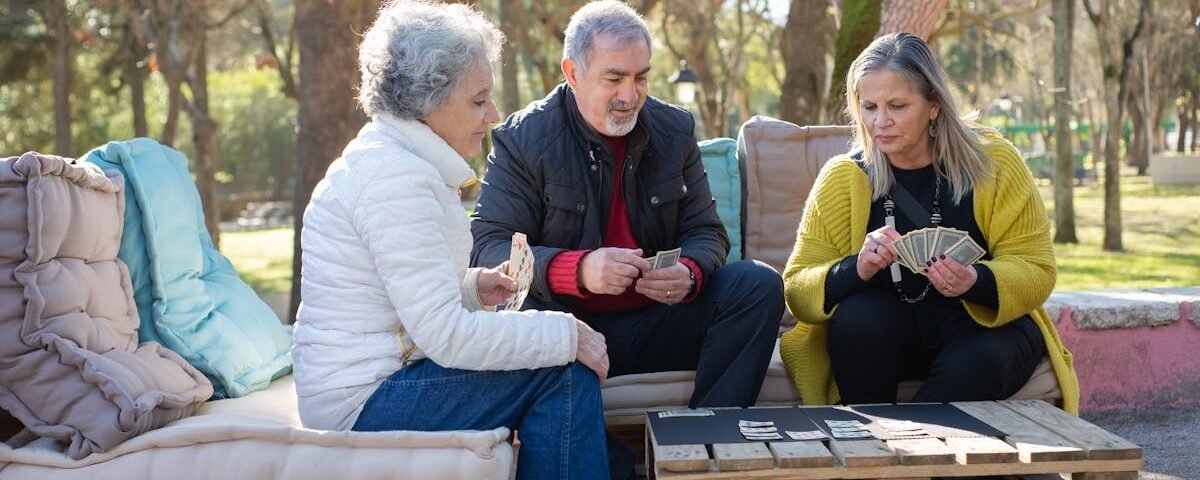
Shared Hobbies. Activities can naturally bring people together around common interests and a sense of purpose. Whether it’s gardening, painting, woodworking, quilting, crocheting, book clubs, music, card games, or playing mahjongg, hobbies create easy conversation and organic friendships without pressure.
Faith, Spiritual, or Reflection Communities. For many seniors, religious or spiritual groups offer built-in social networks, emotional support, and regular gatherings—without pressure. Political groups are also built upon common beliefs and values.
Fitness With a Social Twist. Walking clubs, pickleball courts, water aerobics, and tai chi classes combine movement and conversation. Bonus: exercise adherence skyrockets when friends expect you to show up.
Consistency Beats Intensity. A weekly coffee meetup beats a once-a-year reunion. Regularity builds trust, comfort, and belonging.
How to Create Your Own Social Circle
One of the biggest myths of adulthood is that friendships “just happen.” In retirement, they happen because someone initiates. Here’s a simple framework that works:
- Start small. Invite one person for coffee.
- Repeat regularly. Same day, same time.
- Anchor it to an activity. Walking, games, learning, volunteering.
- Be the connector or teacher. Introduce people to each other. Teach people a new skill or hobby.
You don’t need to be the life of the party—just the person who opens the door. Most Senior Centers are open to creating space for new activities that connect people. If you haven’t found a group for your favorite hobby or activity, ask at your Senior Center about starting one.
Overcoming Common Barriers
If staying social feels hard, you’re not broken—you’re human.
- “I feel awkward.” Everyone does at first. Awkwardness fades with repetition.
- “I’m tired.” Social energy often creates energy, especially when activities are low-pressure.
- “Everyone already has friends.” Many retirees are quietly hoping someone will reach out—just like you.
The most social people aren’t the most confident. They’re the most consistent.
The Bottom Line: Social Connection Is a Retirement Superpower
Staying social after retirement isn’t about filling time—it’s about filling life. Science confirms it. Blue Zones prove it. And retirees everywhere are living it: strong relationships lead to better health, sharper minds, and deeper joy. Retirement gives you something precious—time. Spend it with people who make you laugh, think, move, and feel seen. Because the secret to aging well isn’t just adding years to life—it’s adding life to years.